India’s office work culture looks flexible, yet a real challenge sits underneath it: communication no longer moves in a steady rhythm. The way people move across spaces and tasks inside the office has made availability harder to read. Meetings interrupt deep work. Colleagues hesitate because they’re unsure who’s focused and who’s free. In-office employees rely on cues that change from moment to moment. These small gaps quietly shape how people experience the workday and why many workers still prefer WFH, and how companies can shift that preference back to WFO.
The missing piece is clarity. When teams can’t signal focus or availability in a simple, predictable way, the day becomes fragmented. That uncertainty drives much of India’s workplace discomfort.
This article explores how visibility, practical, shared, and easy to use, can restore flow in office settings, and how tools like Busylight help organizations create workplaces where communication feels natural, respectful, and far more productive.
The Massive Problem India Faces in Office Work
The core problem in India’s office model is the absence of clear, shared visibility of availability. Teams work in the same room but behave as if they have no consistent signal to guide interaction. Employees guess whether colleagues are free, busy, or on a call. In this uncertainty, conversations get delayed, interruptions happen at the wrong time, and deep work is constantly broken.
Office environments demand a level of clarity that traditional cues were never designed for. Open workspaces amplify unpredictability. A person wearing headphones could be concentrating or attending a meeting silently. Someone seated in discussion mode might actually be unavailable for interruptions. This mismatch between digital and physical cues leads to:
- Frequent context switching
- Unnecessary scheduling
- Miscommunication between teams
- Inconsistent collaboration rhythms
Over time, workers associate the office with noise, interruptions, and unpredictability. This is one of the biggest, unspoken reasons office environments feel harder for many employees in India.
Who This Impacts Inside Indian Organizations
This visibility gap touches every layer of a modern workplace. Employees lose focus due to unclear boundaries. Managers struggle to coordinate without interrupting ongoing tasks. New joiners lack cues on how to approach colleagues.
Support teams face missed call alerts when speakers are muted. Knowledge workers feel mentally exhausted from unplanned interruptions. Leaders find collaboration uneven across departments. IT teams handle unnecessary communication escalations.
Ultimately, the entire organization experiences the friction. Productivity drops, communication becomes heavier, and the return-to-office journey becomes emotionally and operationally harder than expected.
A Simple and Practical Solution
The solution begins with restoring visibility. People work better when availability is unambiguous. A simple, intuitive tool that signals real-time presence and focus can transform daily coordination.
Busylight provides that signal. It converts digital availability into a clear physical indicator that everyone can understand instantly. With one glance, teams know when to engage and when to pause. It removes guesswork from communication and replaces it with predictability.
This single change sets the foundation for smoother collaboration, calmer work environments, and stronger return to office adoption.
How Busylight Solves the Office Visibility Gap in Depth
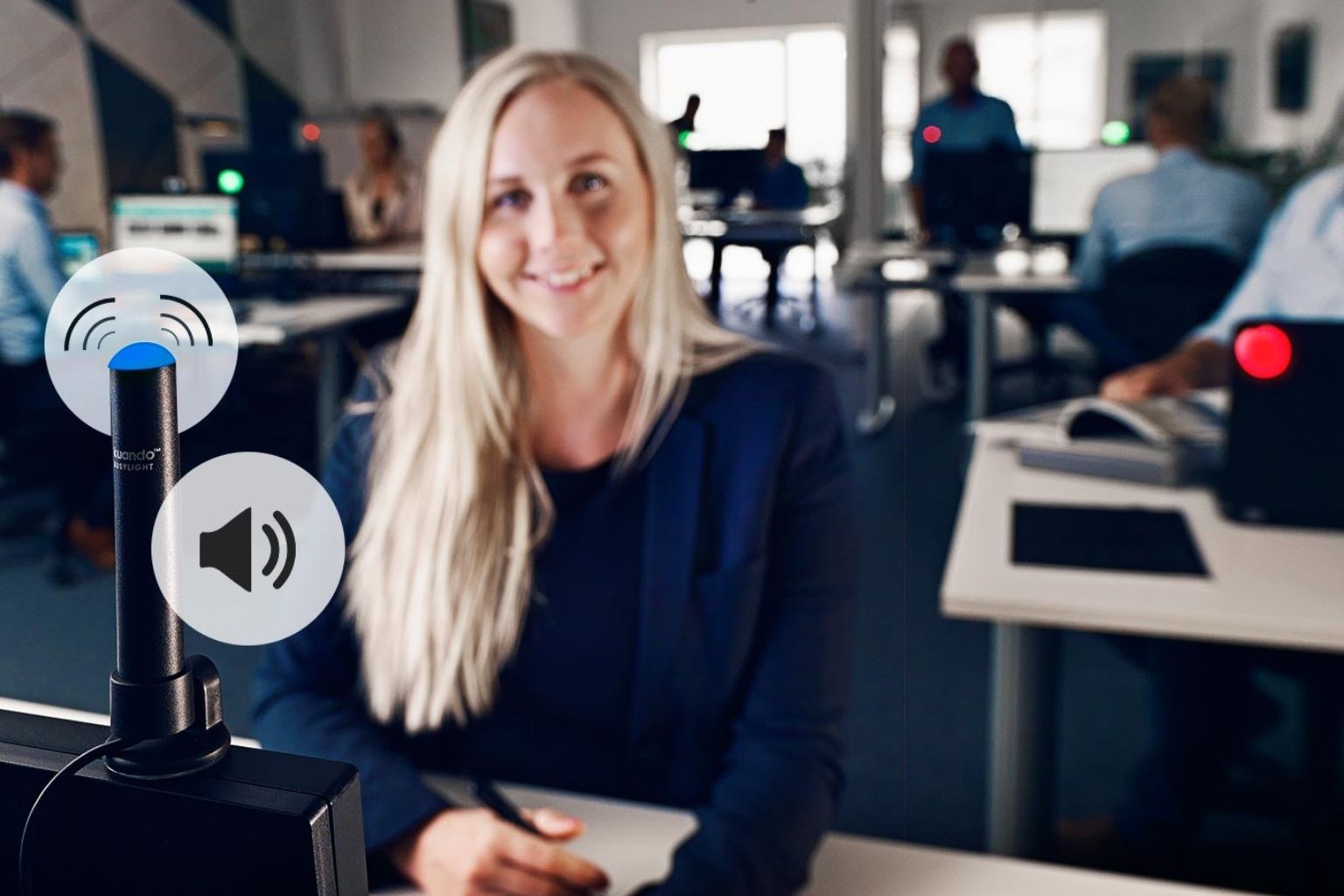
Busylight brings structure to communication by offering instant visibility of an employee’s status. It connects directly with communication tools like Microsoft Teams and Zoom and mirrors the real-time status through color.
Red means the person is busy or in a meeting. Green means they are free to talk. Yellow shows that they are away. Blue can be customized for special workflows, such as focus time or priority tasks.
These signals remove the hesitation people feel when initiating conversations. They also prevent repeated interruptions that break concentration. Teams interact more naturally because they share a common understanding of availability.
The ringer feature further strengthens this experience. Even if speakers are muted or headsets are off, the device alerts employees to incoming calls. This ensures important meetings or client conversations are not missed. In busy operational floors, this reliability becomes essential.
From an organizational standpoint, Busylight is practical to implement. It is plug and play. It integrates seamlessly with existing systems. IT teams can deploy and manage it with minimal effort. Central configuration ensures consistency across departments.
Most importantly, Busylight restores something employees miss in unpredictable office settings. Control over boundaries. Control over focus. Control over interruptions. When people can shape their office environment, their preference naturally shifts from WFH to WFO.
Over time, workplaces become calmer, collaborative, and respectful. Conversations shift from accidental to intentional. Meetings happen when they make sense. Teams begin to trust the physical workplace again.
For companies in India that want to rebuild a strong in-office culture, this small device becomes a strategic enabler that realigns behaviour, communication, and productivity.
How It Helps India Shift Back to Office
Many employees prefer WFH for predictability. When offices deliver the same clarity, their preference shifts confidently back to WFO.
Busylight brings predictability by making focus visible, making calls unmissable, and making collaboration more natural. It transforms the office from a disruptive space into a structured environment where work flows instead of competing.
The more predictable the office feels, the more employees participate confidently in WFO routines. Teams choose the workplace because it supports their productivity better.
Conclusion
India’s office model has matured, but the hidden gap of visibility still holds teams back. When people cannot see availability clearly, offices become unpredictable. Busylight solves this by turning availability into a simple visual signal that aligns communication across physical workspaces.
For organizations planning structured return-to-office ecosystems, this clarity helps shift worker preference from WFH back to WFO. It reduces interruptions, improves collaboration, and brings harmony back into team interactions.
To explore how Busylight can support your workplace transformation goals, connect with CEECO for deployment guidance and consultation.
FAQs
How does Busylight help teams in offices?
It gives clear, real-time visibility of availability, which reduces interruptions and improves coordination.
Why is visibility important for office communication?
Offices often run on shared spaces and fast-paced communication. Predictable availability reduces friction and hesitation.
Does Busylight help prevent missed calls inside the office?
Yes. The device syncs with communication tools and its ringer alerts employees even when speakers or headsets are muted.
Is Busylight easy for IT teams to roll out in large organizations?
It is plug-and-play and integrates with existing platforms, which makes deployment simple and scalable.
Will Busylight support return-to-office strategies and help shift employees’ preferences from WFH to WFO?
Yes. By making offices calmer and more predictable, it encourages employees to prefer WFO with greater confidence.

Leave a Reply